
Ginkgo Biloba Capsules (Standardized Extract)
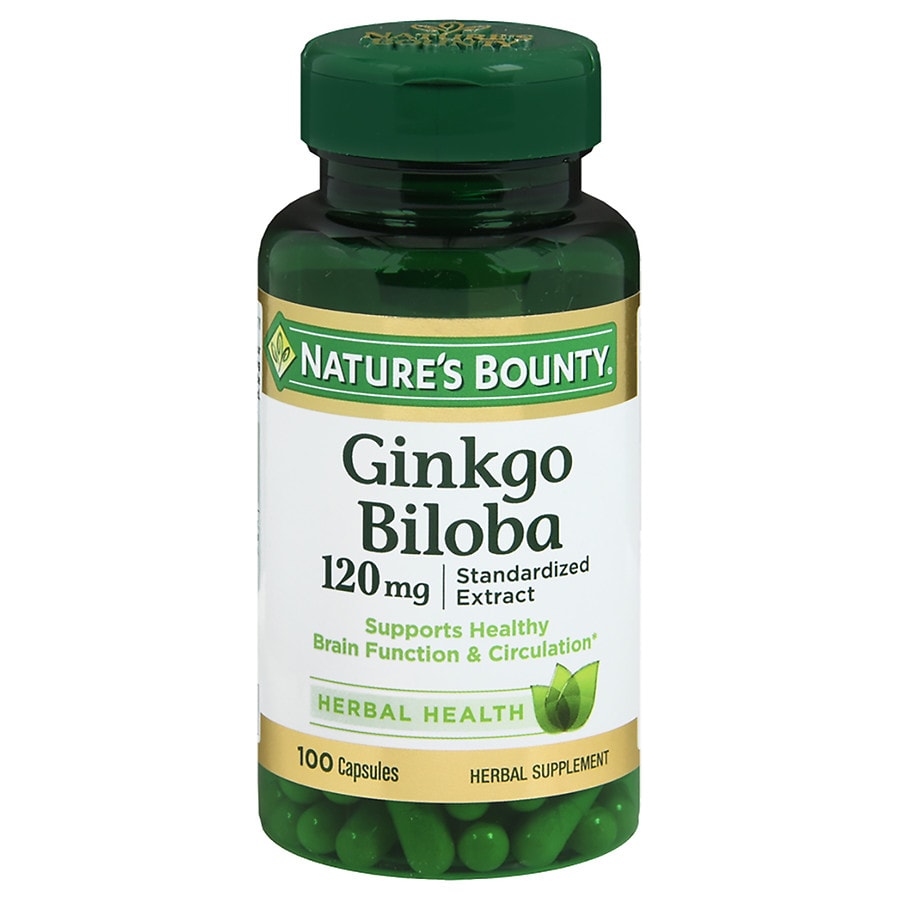
Ginkgo Biloba Capsules contain a highly purified, phytochemically standardized dry extract derived from the leaves of the Ginkgo biloba (maidenhair) tree. As one of the most thoroughly investigated botanical matrices in neuropharmacology, this complex extract is systematically processed to isolate specific active secondary metabolites while removing unwanted plant components. Encapsulated into uniform solid doses under strict industrial parameters, these standards are engineered exclusively for in vitro laboratory analysis, mass spectrometry calibration, phytotherapeutic profiling, and comparative cellular aging assays.
Sourcing this botanical extract in a pre-measured capsule format offers notable handling and stability advantages. The outer shell preserves the multi-component chemical profile of the active crystalline powder inside, shielding it from light-induced oxidation and ambient moisture, while completely eliminating the scale errors and airborne particulate dispersion hazards encountered when weighing loose bulk plant matter.
The Advantages of Standardized Capsule Formats
Utilizing Ginkgo Biloba Capsules rather than raw uncompressed leaf fragments or bulk powders introduces essential operational controls that safeguard experimental precision and protect the structural integrity of your laboratory repository.
1. Mitigation of Airborne Particulate Cross-Contamination
Raw botanical powders are highly prone to static accumulation, causing fine organic dust to cling to weighing vessels or drift through laboratory drafts. Unintentional airborne particulate migration represents a major vector for cross-contamination in sensitive chemical environments. The encapsulated design completely secures the matrix, allowing laboratory staff to handle, transfer, and isolate the exact active mass with complete volumetric safety.
2. Standardization of Complex Multi-Component Fingerprints
Unlike raw botanical products which exhibit heavy localized variance due to soil quality, harvest timing, and climate conditions, these capsules are packed with a strictly standardized extract. Each individual capsule delivers an exact, unvarying phytochemical profile ($\pm 0.5\%$), protecting multi-week longitudinal baseline tracking from composition drift.
The Phytochemical Architecture of Ginkgo Biloba
The molecular framework of a high-quality Ginkgo biloba extract relies on a synergistic combination of two prominent chemical classes. According to extensive reference records curated inside the National Center for Biotechnology Information (NCBI) PubChem Database, the extract must be strictly calibrated to contain specific concentrations of bioactive compounds to ensure reproducible research baselines.
Plaintext
                        [Ginkgo Biloba Extract]
                                   |
         +-------------------------+-------------------------+
         |                                                   |
 [Flavone Glycosides] (24%)                         [Terpene Lactones] (6%)
 (Quercetin, Kaempferol, Isorhamnetin)                       |
                                            +----------------+----------------+
                                            |                                 |
                                    (Ginkgolides A, B, C, J)             (Bilobalide)
1. Ginkgo Flavone Glycosides (Standardized to 24%)
This fraction consists primarily of O-glycosides derived from the flavonols quercetin, kaempferol, and isorhamnetin.
-
Antioxidant Dynamics: In vitro cell-line modeling demonstrates that these polyphenolic structures behave as potent free radical scavengers. They actively neutralize reactive oxygen species ($ROS$) and inhibit lipid peroxidation within cellular membranes under induced metabolic stress.
2. Terpene Lactones (Standardized to 6%)
This highly specific fraction is divided into unique diterpenes (Ginkgolides A, B, C, and J) and a unique sesquiterpene (Bilobalide).
-
Platelet-Activating Factor (PAF) Antagonism: Ginkgolides—specifically Ginkgolide B—act as potent, competitive antagonists at the central and peripheral $PAF$ receptor sites. This targeted block downregulates $PAF$-induced platelet aggregation, neutrophil degranulation, and oxygen radical production.
-
Neuronal Membrane Stabilization: In vitro functional assays show that Bilobalide protects mitochondrial respiratory chain components and helps preserve adenosine triphosphate ($ATP$) levels under hypoxic or ischemic laboratory conditions.
3. Removal of Toxic Ginkgolic Acids
Raw Ginkgo leaves contain alkylphenols known as ginkgolic acids, which exhibit documented cytotoxic, allergenic, and mutagenic properties. Industrial-grade standardization protocols strictly limit these components to less than 5 ppm (parts per million) within the encapsulated material, ensuring clean, non-toxic baselines for cell culture evaluations.
Technical Specifications: Ginkgo Biloba Extract Assay
To preserve objective analytical standards for seamless laboratory integration, all promotional language is omitted in favor of verified empirical chemical values.
| Parameter | Detailed Empirical Specification |
| Chemical Identification | Standardized Ginkgo biloba Leaf Dry Extract |
| Extract Ratio Baseline | Approximately 50:1 (50 kg raw leaf yields 1 kg extract) |
| Substance Classification | Ginkgoaceae Plant Extracts / Neuroprotective Agents |
| Ginkgo Flavone Glycosides | 24.0% – 27.0% verified via High-Performance Liquid Chromatography (HPLC) |
| Total Terpene Lactones | 6.0% – 7.0% (Ginkgolides A, B, C: 2.8%-3.4%; Bilobalide: 2.6%-3.2%) |
| Ginkgolic Acid Limit | < 5 ppm (Parts Per Million) via HPLC-UV verification |
| Physical Appearance | Fine, light greenish-yellow to brown powder enclosed in a transparent shell |
Frequently Asked Questions Regarding Laboratory Compliance
What are the primary solubility limits of this standardized extract?
Due to its multi-component phytochemical architecture, the extract displays dual solubility characteristics. The flavone glycoside fraction breaks down efficiently in highly polar environments, including water and aqueous laboratory buffers. Conversely, the lipophilic terpene lactone fraction dissolves smoothly in high-purity laboratory methanol, anhydrous ethanol, and dimethyl sulfoxide ($DMSO$), making it highly adaptable for automated liquid chromatography-mass spectrometry (LC-MS) mapping.
How should this chemical material be stored over long cycles?
To maximize stability and prevent atmospheric moisture absorption or internal clumping, keep the capsules tightly sealed in their original container within a dry, dark environment away from direct UV radiation. Ambient room temperatures between 15°C and 25°C are entirely sufficient to maintain full molecular potency over short-term testing windows; however, for multi-year archives, keeping the sealed containers under desiccated conditions will completely halt any trace chemical breakdown. For additional regulatory guidance on handling research chemical standards safely, researchers can view active parameters outlined by the European Chemicals Agency (ECHA).
Is this compound approved for human consumption or clinical therapy?
While standardized Ginkgo biloba extracts are widely distributed globally as dietary supplements and regulated phytomedicines for peripheral vascular and cognitive conditions, this specific material is refined and packaged strictly for in vitro laboratory analysis, forensic identification, and scientific research. It is explicitly not approved for direct human consumption, veterinary use, or clinical diagnostic trials within this laboratory reference framework.
Secure Industrial Chemical Excellence
Do not compromise your laboratory’s analytical data or ongoing research cycles on unverified, loosely handled chemical products that exhibit heavy localized degradation. By selecting our Ginkgo Biloba Capsules, you introduce uncompromising laboratory purity, verifiable chemical stability, and immaculate baseline precision into your experimental workflow. The resulting mitigation of trace impurities, highly predictable solubility profiles, and clear assay metrics will empower your research collective to break through analytical plateaus with absolute, unwavering confidence.