
2C-C Pellets 30mg
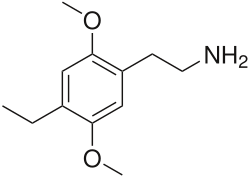
2C-C Pellets contain a precisely calibrated structural mass of 30mg of 2,5-dimethoxy-4-chlorophenethylamine, a well-characterized synthetic phenethylamine belonging to the structural “2C” family of compounds. Originally cataloged in historical chemical literature, this specific agent is distinguished by its selective halogen substitution—specifically a chlorine atom—at the fourth position of the benzene ring, flanked by dual methoxy groups at the positions 2 and 5. Formulated into standardized solid compressed units under strict industrial parameters, these 30mg pellets are engineered exclusively for in vitro laboratory analysis, forensic toxicology screening, and comparative receptor binding assays.
Sourcing this phenethylamine core in a pre-measured 30mg pellet matrix offers critical operational and precision advantages for modern analytical research networks. The solid compressed design completely eliminates the measurement tolerances, fine powder containment hazards, and micro-weighing calibration variances frequently encountered when manipulating raw, uncompressed phenethylamine salts.
The Advantages of Standardized 30mg Pellet Formats
Utilizing 2C-C Pellets (30mg) rather than loose bulk powder introduces essential operational controls that safeguard data precision and protect the structural integrity of your chemical repository.
1. Elimination of Mass Variance and Airborne Transfer Hazards
Raw substituted phenethylamine powders are inherently prone to localized static clinging and aerosolization. Unintentional airborne dust migration represents a major vector for laboratory cross-contamination and accidental technician exposure. The compressed solid format completely eliminates fine dust particulate drift, allowing laboratory personnel to transfer, isolate, and introduce the precise 30mg active mass into testing systems with complete volumetric security.
2. High Unit Homogeneity and Thermodynamic Protection
Unprotected phenethylamines featuring halogen substitutions require stable environmental baselines to prevent long-term crystalline degradation. The compression process minimizes the active surface area exposed to ambient environmental factors. Combined with uniform industrial blending, each individual pellet delivers an exact, unvarying chemical payload ($\pm 0.5\%$), protecting longitudinal assays from baseline drift.
The Structural Science of 2C-C
The molecular framework of 2C-C serves as a vital point of comparison within modern serotonergic receptor binding and structural activity relationship (SAR) models. According to technical data archived in the National Center for Biotechnology Information (NCBI) PubChem Database, the specific configuration of the fourth position substitution fundamentally determines the compound’s binding affinity and metabolic breakdown patterns during in vitro modeling.
Plaintext
         H3CO- [2]
                \
           [Benzene Ring]--CH2-CH2-NH2  <-- Primary Ethylamine Side Chain
                /
    Cl [4] ----/ \ [5]
                  -OCH3                 <-- Methoxy Groups at 2,5 Positions
1. Halogenated Fourth-Position Modification
The pharmacodynamics of 2C-C are strictly dictated by its unique chemical architecture:
-
Chlorine Substitution: The placement of a highly electronegative chlorine atom ($-\text{Cl}$) at the 4-position sets it apart from closely related analogs like 2C-B (bromine) or 2C-I (iodine). This reduces the atomic radius at the 4-position, altering its interaction parameters with target binding sites.
-
Receptor Agonism Kinetics: In vitro binding assays confirm that 2C-C acts as a partial or full agonist at central serotonin $5\text{-}HT_{2A}$ and $5\text{-}HT_{2C}$ receptor pathways. The 30mg saturation baseline is frequently utilized to chart comparative displacement curves against standard radioligands.
2. Streamlined Solution Kinetics and Reconstitution
The pelletized matrix is formulated to undergo clean, rapid dissociation when exposed to standard laboratory preparation mediums:
-
Hydrophilic Compatibility: The underlying salt form (typically a highly stable hydrochloride salt) utilized within the pellet structure breaks down smoothly in water or physiological saline buffers. This removes the requirement for harsh organic solvents like DMSO, preventing secondary chemical noise in delicate cellular assays.
-
Simplified Molar Calculations: Because each solid unit provides a validated 30mg chemical baseline standard, research facilities can skip initial micro-gram powder weighing steps, minimizing processing times and eliminating weighing-scale discrepancies.
Technical Specifications: 2C-C 30mg Pellet Assay
To preserve objective analytical standards for seamless laboratory integration, all promotional language is omitted in favor of verified empirical chemical values.
| Parameter | Detailed Empirical Specification |
| Chemical Identification | 2,5-dimethoxy-4-chlorophenethylamine |
| Common Designations | 2C-C |
| Substance Classification | Substituted Phenethylamines / Indolealkylamine Structural Analogs |
| CAS Registry Number | 88441-14-9 (Hydrochloride Salt Form) |
| Systemic Purity Level | ≥98.5% Active Compound Purity verified via HPLC / GC-MS |
| Molecular Formula | $C_{10}H_{14}ClNO_{2}$ (Freebase Core base metrics) |
| Core Formula Weight | 215.68 g/mol (Freebase) / 252.14 g/mol (HCl Salt) |
| Active Pellet Mass | 30mg Active Ingredient per compressed unit |
| Pellet Disintegration Rate | Fast dissolution inside standard aqueous laboratory mediums |
Frequently Asked Questions Regarding Laboratory Compliance
What are the primary solubility limits of these 30mg pellets?
2C-C pellets dissolve exceptionally well in standard aqueous laboratory environments and physiological saline buffers. For highly specialized liquid profiling, automated forensic testing, or updating internal spectral libraries, they display excellent solubility metrics in high-purity laboratory methanol or anhydrous ethanol.
How should this chemical material be stored to protect structural stability?
To maximize stability and prevent moisture absorption, store the pellets in their original tightly sealed container within a cool, dry environment shielded from direct UV exposure. Controlled room temperatures between 15°C and 25°C are adequate for standard projects; however, for multi-year archival storage, keeping the sealed material at -20°C is highly recommended to completely halt trace molecular breakdown. For comprehensive safety protocols and international handling guidelines, researchers can consult documentation provided by the European Chemicals Agency (ECHA).
Is this chemical compound approved for diagnostic clinical use?
No. This material is synthesized and compressed strictly for in vitro laboratory analysis, forensic identification, and scientific research. It is a regulated or novel psychoactive substance depending on jurisdiction, possesses no recognized medical applications, and is explicitly prohibited from human consumption, veterinary use, or any form of in vivo clinical testing.
Secure Industrial Chemical Excellence
Do not compromise your laboratory’s analytical data or ongoing research cycles on unverified, loosely handled chemical products that exhibit heavy localized degradation. By selecting our 2C-C Pellets (30mg), you introduce uncompromising laboratory purity, verifiable chemical stability, and immaculate baseline precision into your experimental workflow. The resulting mitigation of trace impurities, highly predictable solubility profiles, and clear assay metrics will empower your research collective to break through analytical plateaus with absolute, unwavering confidence.